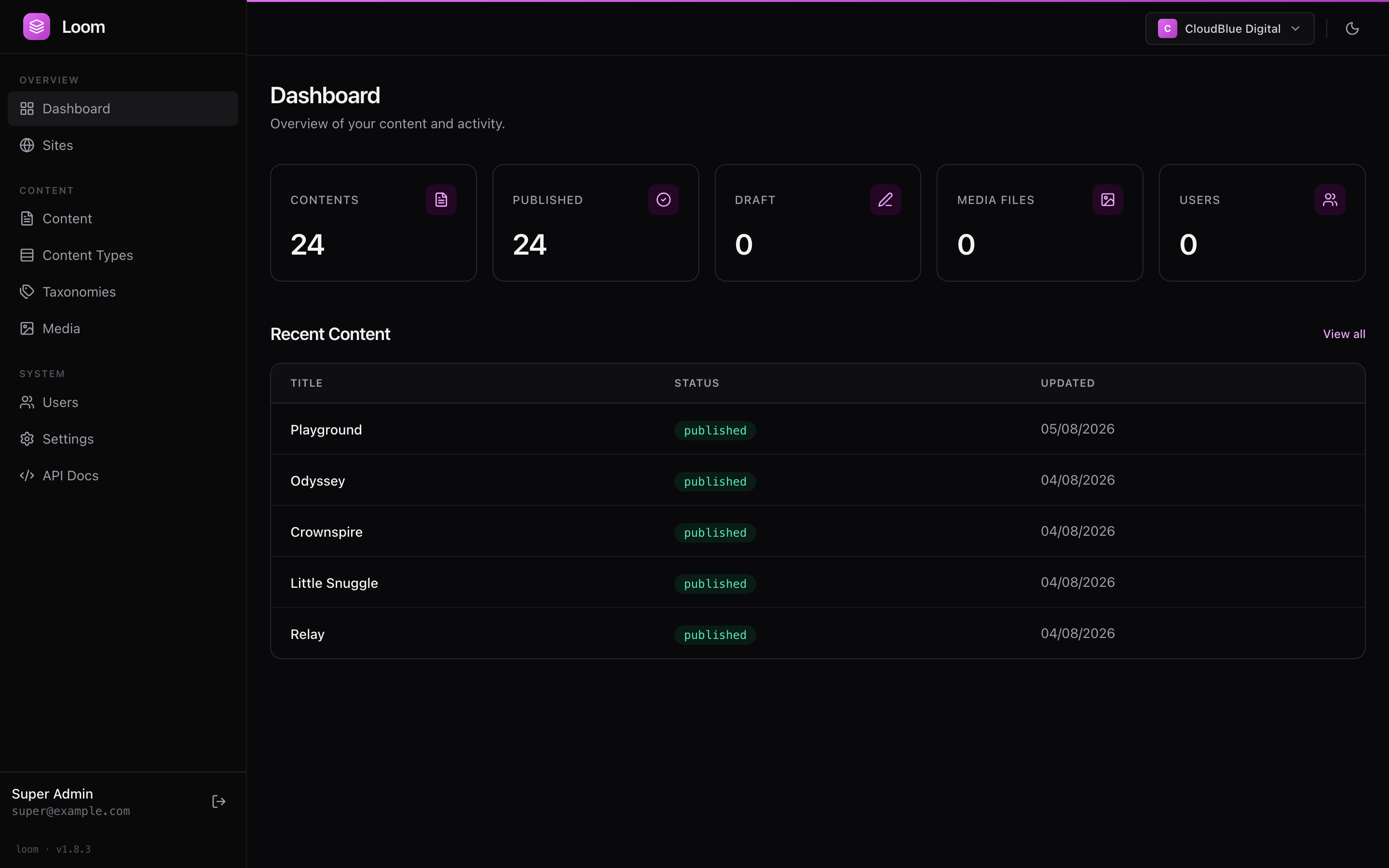
Loom
Web · Self-hosted · Kubernetes
The headless CMS that weaves your content into every frontend.
Loom is a headless, API-first content platform built for teams that run more than one site. Every page, post, and custom entry lives behind a clean delivery API, so your frontends — Laravel, React, mobile apps, anything that speaks JSON — stay fast and stay yours.
Model the content you actually have
Define custom content types with schema-driven fields — text, rich text, media, selects, JSON — and the editing UI adapts to match. Taxonomies, tags, and hierarchical terms keep large libraries organised, and every site gets its own keys, users, and permissions.
Publishing that behaves like a workflow
Drafts, review and approval, scheduled publishing and unpublishing, full revision history, and shareable preview tokens for unpublished work. Editors get an AI assistant for grammar, generation, and suggestions; developers get webhooks with delivery logs and replay.
Built to be deployed, not hosted for you
Loom ships as a container and runs happily in Kubernetes — it powers cloudbluedigital.co.uk from the same cluster that serves this page. Media variants are generated in the background, search is instant, and the delivery API is rate-limited and cache-friendly by design.
Hive
Web · Self-hosted · GitLab
Point AI at your backlog. Review merge requests, not prompts.
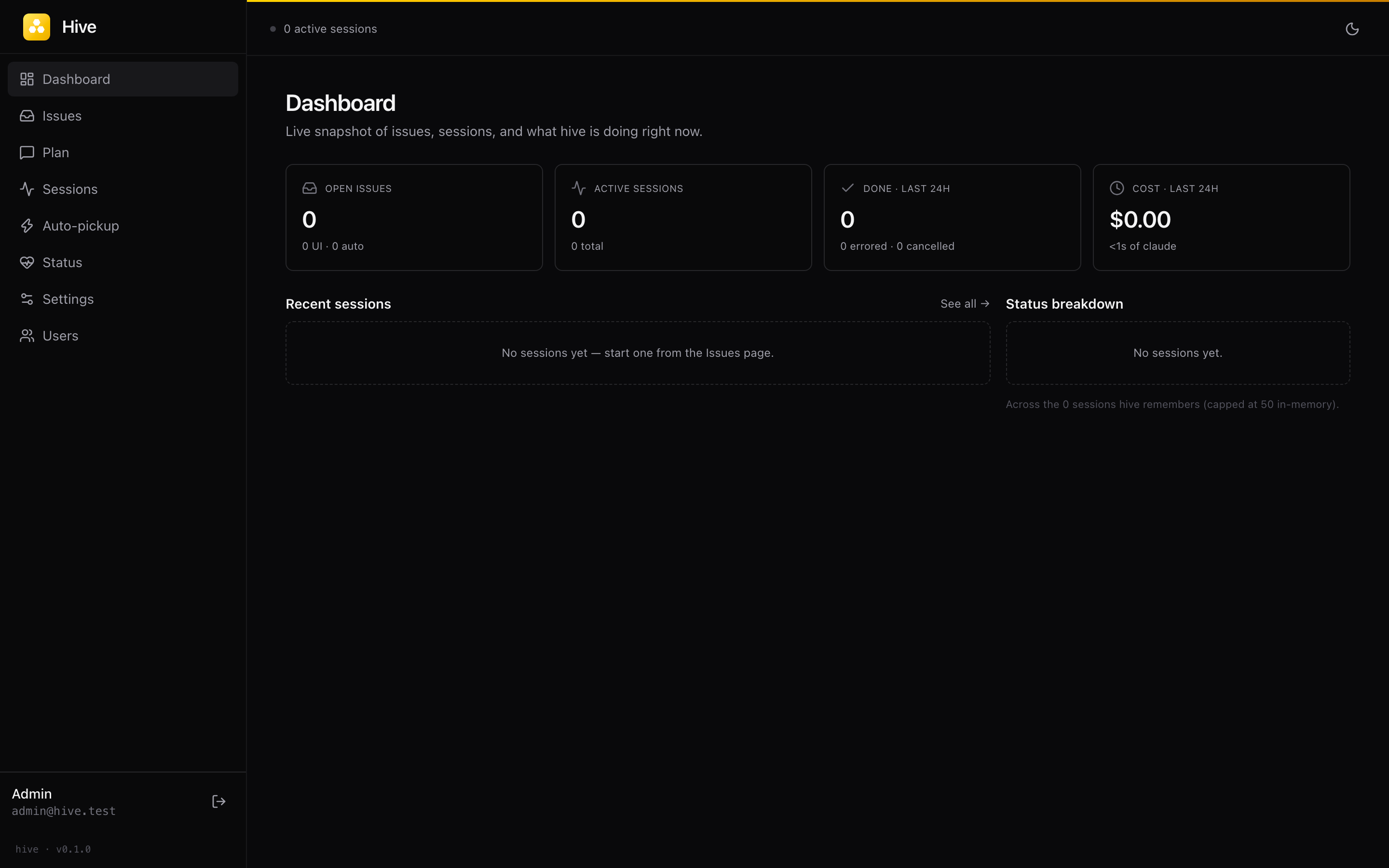
Hive is a web UI and orchestrator that turns your GitLab backlog into an AI-powered engineering queue. It lists open issues across your whole group, lets you launch an AI coding session against any of them — several at once, in parallel — and streams every step of the work live to your browser.
You stay in control of what runs
Automation is gated by labels. Tag an issue for the dashboard and start it yourself, or tag it for the poller and Hive picks it up automatically. Either way each session runs in its own isolated working directory, and nothing lands on a branch you care about without review.
The output is a merge request
When a session finishes, Hive opens a draft merge request with the changes. Your review process stays exactly what it is today — the difference is how much of the backlog is already waiting in review when you sit down with your coffee.
Retina
Web · Self-hosted · API
From labelled images to a production inference API.
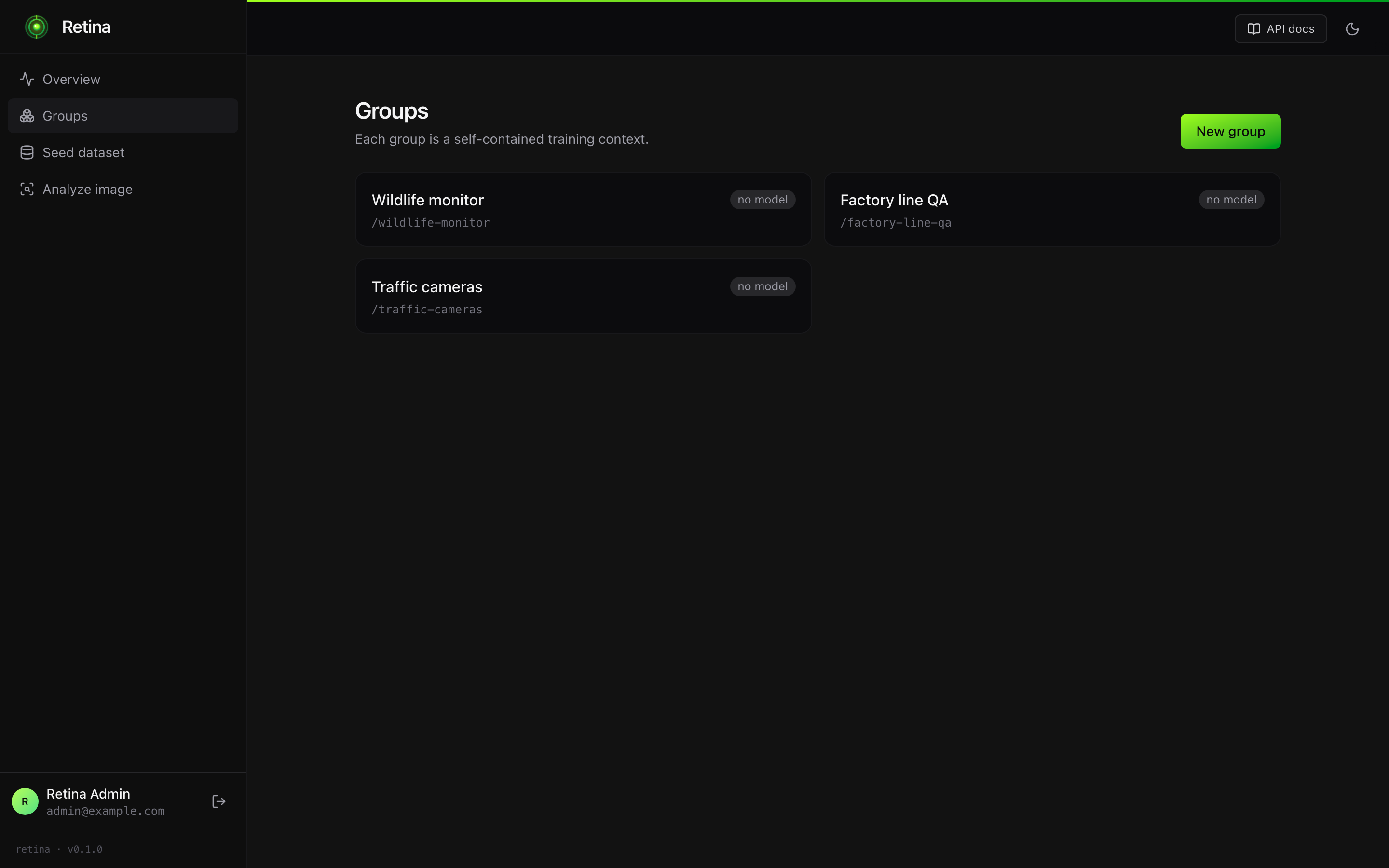
Retina is a computer-vision platform that covers the whole path from raw images to a production prediction endpoint. Upload images, organise them into groups, train a model, and call the inference API — without stitching together half a dozen MLOps tools first.
Training you can watch
Training runs happen on background workers with live progress in the UI, and every run is tracked in MLflow so you can compare experiments and keep the model that actually wins. Datasets live in object storage, not on someone's laptop.
An API your team can build on
The inference API is documented with OpenAPI, so integrating predictions into your product is a code-generation step, not an archaeology project. Deploy it next to your other workloads and keep your images inside your own infrastructure.
Sentinel
Kubernetes · Slack · GitLab
Not another dashboard — a to-do list for your cluster.
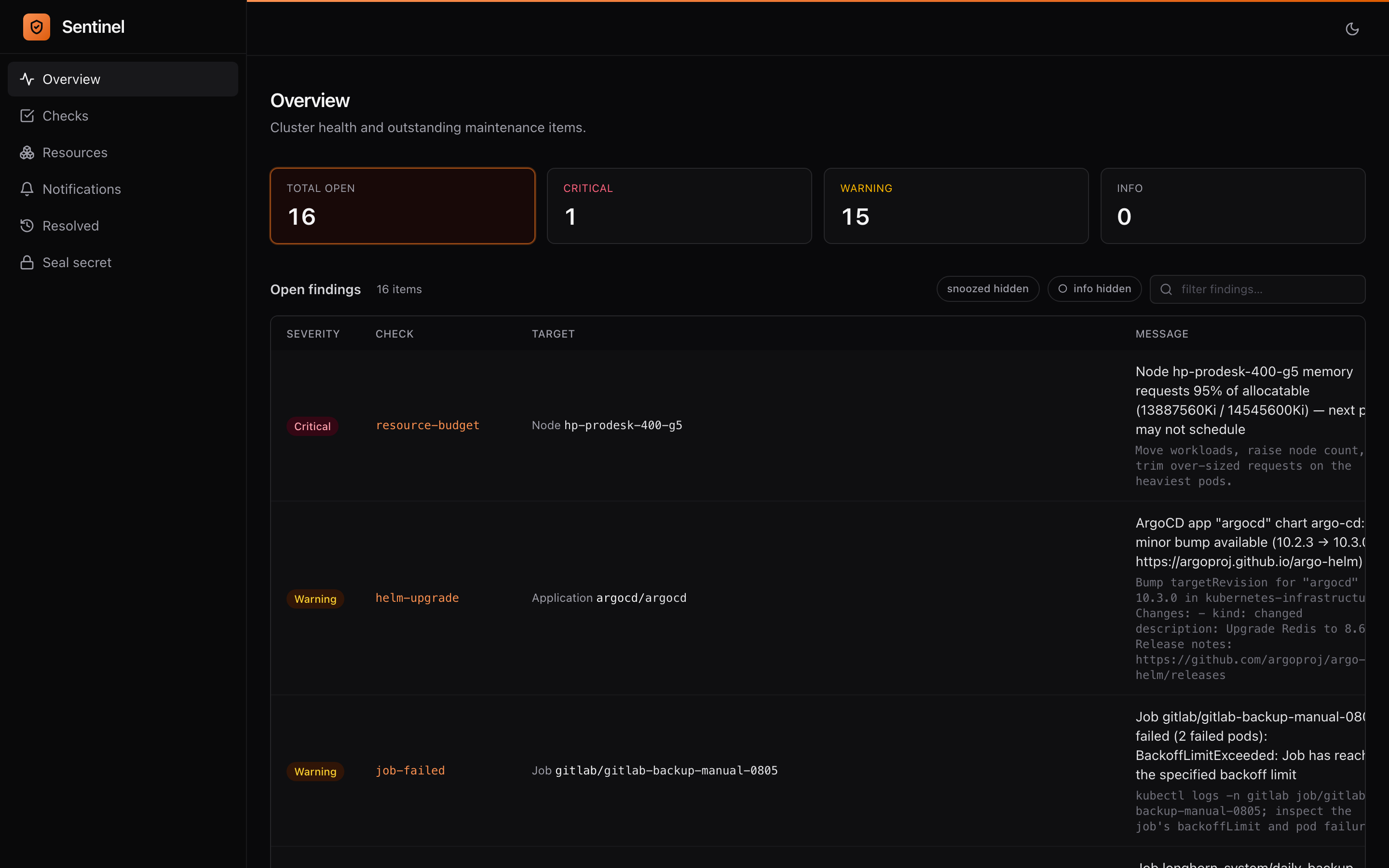
Prometheus and Grafana tell you what is happening. Sentinel tells you what to do. It runs inside your cluster, executes a battery of health checks — pods, nodes, PVCs, certificates, GitOps apps, backups, storage, image hygiene — and turns the results into a short, opinionated list of maintenance items.
Problems become tickets, not pages
Critical events go to Slack. Recurring pod-log errors are fingerprinted, summarised, and opened as issues against the right repository — with enough context that whoever picks them up can start fixing instead of investigating. A stability window keeps deploy-time restarts from becoming noise.
Maintenance on rails
When a Helm chart you run has a new release, Sentinel opens a one-line merge request against your infrastructure repo with a summarised release-notes brief, so staying current is a review-and-merge instead of a research afternoon. There's a resource browser with per-pod log streaming for the moments you do need to dig, and built-in secret sealing for the moments you need to ship configuration safely.
Configurator
Web · Android · Fastlane
Every app, every keystore, every store listing — one dashboard.
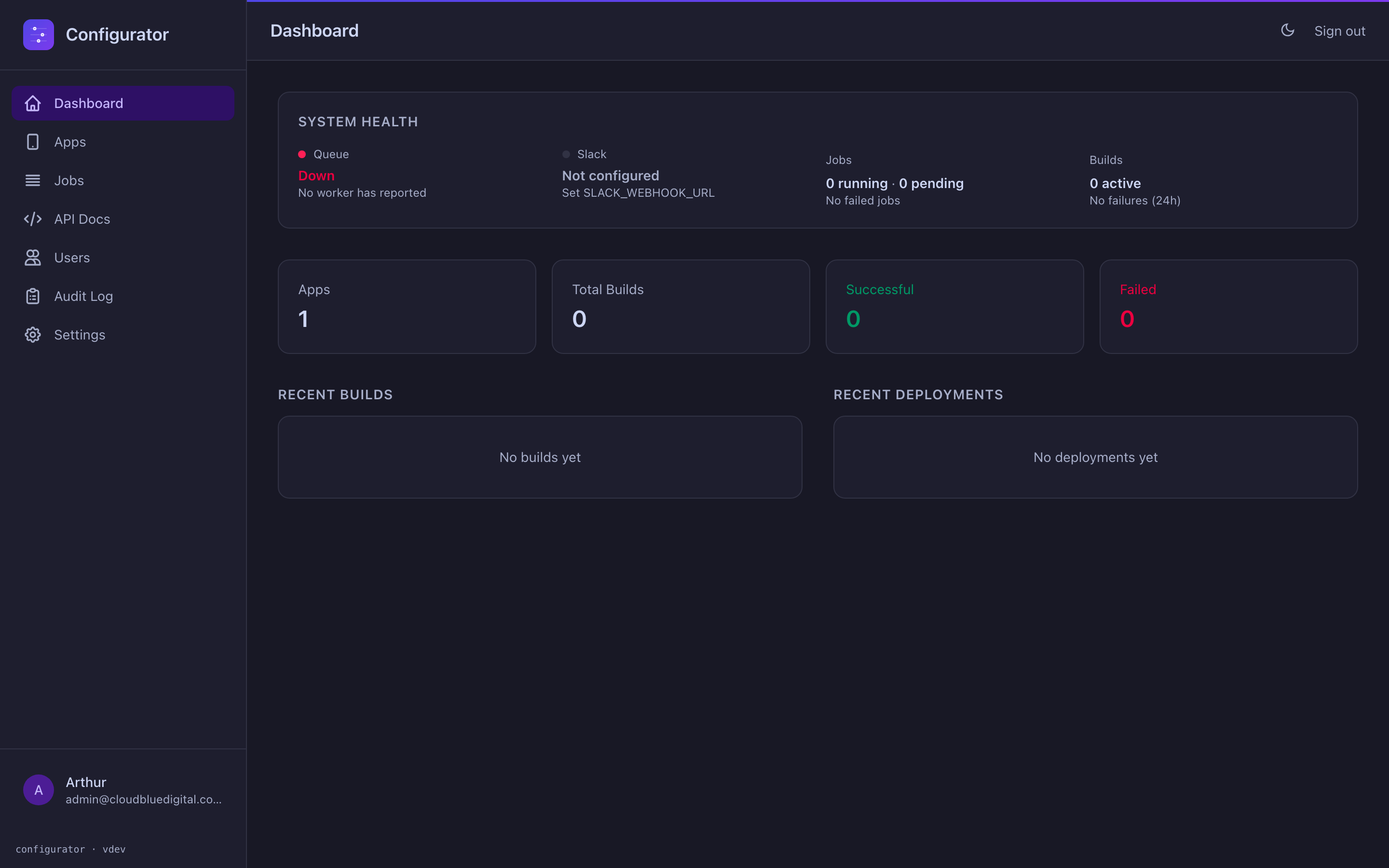
Once you ship more than one mobile app, the real work stops being code and starts being logistics: keystores, Firebase projects, store listings, CI variables, release lanes. Configurator is the dashboard that owns all of it.
Configuration lives in one place
Each managed app has its repository cloned on demand and its signing, Firebase, store metadata, and CI variables centrally configured. No more hunting through per-repo secrets to find which keystore signs what.
Deployments are a button
Builds and store deployments run through Fastlane lanes triggered straight from the dashboard, so cutting a release is the same three clicks for every app you manage — whether it is your first app or your fifteenth.
Ark
macOS · Linux · Windows
Every stack. One click. No Docker.
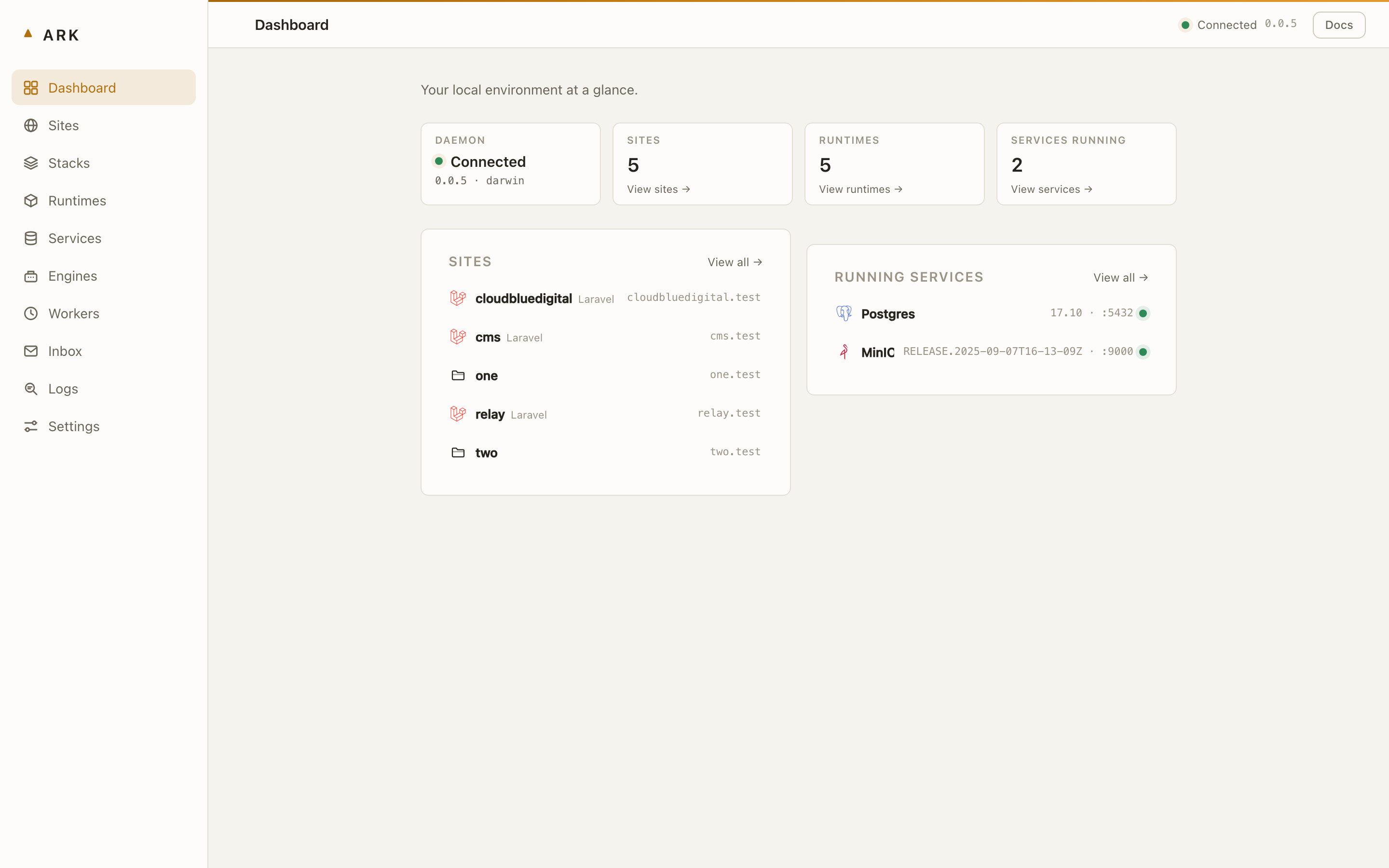
Ark is a one-click local development environment for any language — PHP, Node, Python, Go, Java, .NET, Ruby — on macOS, Linux, and Windows. Install one app, park a folder, and every project inside it is instantly reachable at https://<name>.test with a trusted certificate, running on the runtime and services it declares.
No Docker. No VMs. No config archaeology.
Ark runs everything natively, so your projects start fast, your laptop battery survives the afternoon, and your file watchers actually watch files. Runtimes and services are downloaded on demand and managed for you — including running multiple versions side by side.
CLI-first, GUI included
The Ark daemon does the work; the GUI and the ark CLI are both thin clients on top of the same API. That means everything the GUI can do, your shell scripts and CI can do too — link a site, pin a runtime version, snapshot a database, tail a log.
For every stack you run
Where PHP-only tools stop at PHP and macOS-only tools stop at macOS, Ark is built tri-platform and polyglot from day one. One tool for the whole team, whatever they build on, whatever they build with.
Installing it
Downloads are the latest release for macOS (Apple silicon), Linux (AppImage, deb, rpm), and Windows. The builds are not code-signed yet, so macOS Gatekeeper and Windows SmartScreen will warn you the first time you launch Ark — on macOS, open it from Finder with Open in the context menu; on Windows, choose More info then Run anyway. Every artifact's SHA-256 is published in the release manifest if you want to check a download before you run it.
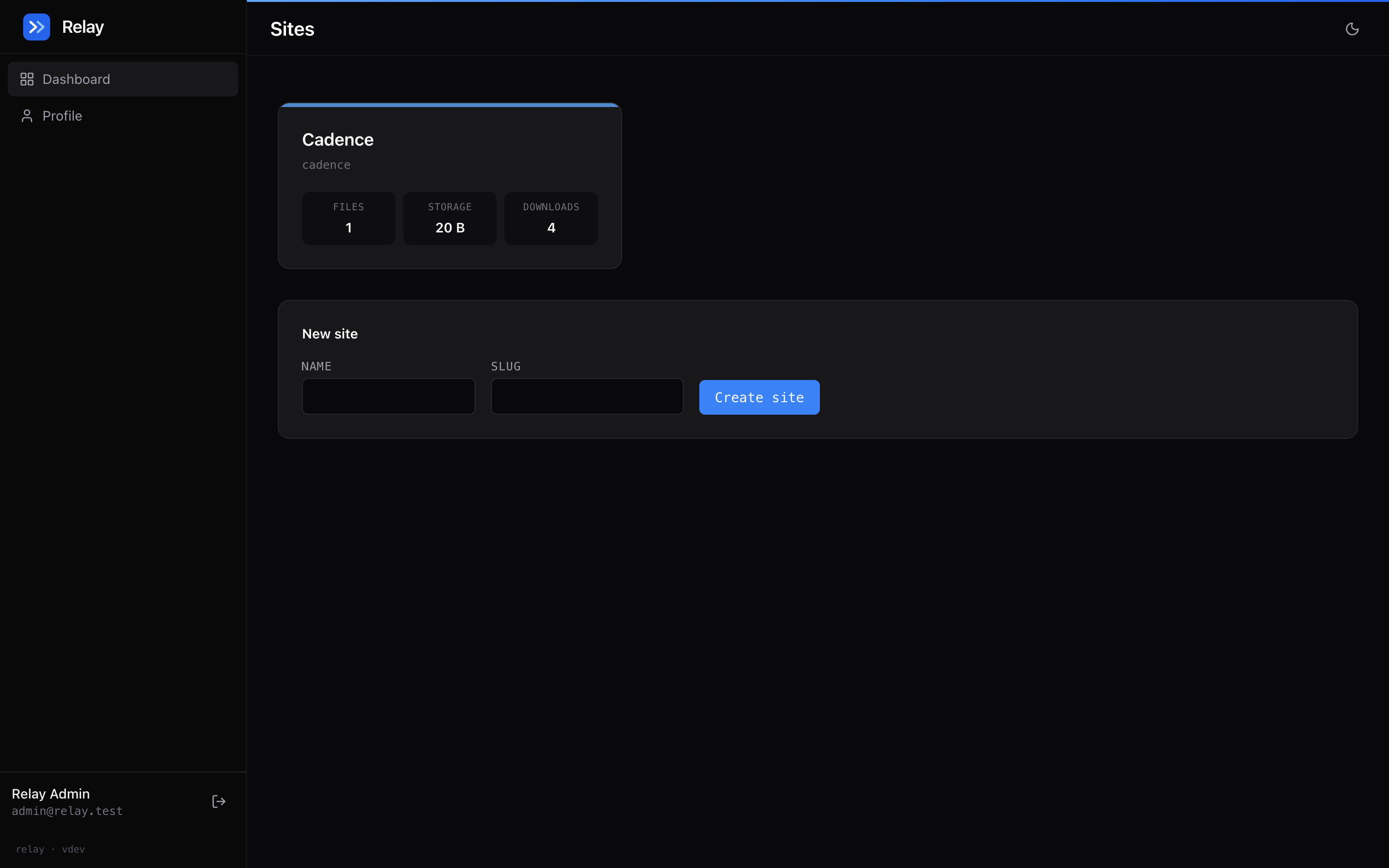
Relay
Web · API · Kubernetes
Your files, delivered — with the dashboard to prove it.
Relay is our file hosting and delivery service: a home for the artefacts a modern product ships — installers, APKs, game builds, media — with real URLs, real caching, and a real dashboard.
Scoped to your clients and sites
Every bucket of files is bound to a client or website, with its own access keys and signed, expiring download links where you need them. You decide what is public, what is gated, and who can see the numbers.
Stats you can act on
The dashboard shows downloads, bandwidth, and top files per site over time, alongside a file browser for uploading, organising, and sharing. Releases can be published from CI through the API, so shipping a new build is part of the pipeline, not a manual afterthought.
Relay is coming soon. Get in touch if you would like early access.